Summary
This CPD course is a practical review of spousal and common-law partner open work permits (SOWPs) under LMIA exemption codes C41 and C42. Veronica Sepehr covers first-time applications, extensions of existing permits, and moves from one eligibility route to another, assessed against the principal foreign national’s status in Canada, study program, type and duration of work authorization, occupation and NOC/TEER classification, permanent residence pathway, and any applicable international agreement or public policy. Through worked scenarios, she shows how the January 21, 2025 restrictions narrowed C42 eligibility for spouses of international students, how the TEER and 16-month tests apply to spouses of workers and PGWP holders under C41, how to handle the move from study permit to PGWP and concurrent filing, and when IEC, CETA, CUKTCA, CPTPP and other agreements create separate routes. The course closes with alternatives when C41 or C42 is unavailable and a final filing checklist. It is built for RCICs and immigration lawyers who want to run SOWP files end to end, from choosing the right route to assembling the evidence and filing.
Course outline
- C41 and C42 Eligibility Framework
- Purpose and legal basis: spousal open work permits under paragraph 205(c)(ii) of the IRPR.
- C41 vs. C42: what each LMIA exemption code covers and the eligibility criteria that support each application.
- Relationship requirements for spouses and common-law partners, and the evidence that establishes them.
- Three application postures: a first SOWP, an extension, and a change to a different eligibility route.
- Decision sequence: identify the principal foreign national’s status, select the applicable route, assess the study or employment requirements, confirm remaining permit validity, then review the evidence.
- First C42 Applications (Spouses of International Students)
- January 21, 2025 restrictions and how they narrowed new C42 applications.
- Eligible programs: master’s programs of at least 16 months, doctoral programs, listed professional degree programs, and specifically designated programs.
- Student-side requirements: valid study permit, current enrolment, full-time study, and final-term considerations.
- Evidence package: proof of relationship plus documents establishing the program and enrolment.
- Permit duration: validity of the spouse’s work permit and limits created by the study permit or the spouse’s passport.
- Scenario: a student completing a two-year college diploma wants their spouse (outside Canada) to file a first SOWP: why PGWP eligibility of the program does not, on its own, create C42 eligibility.
- Extensions for Existing C42 Holders
- Extension vs. first application: where the requirements diverge, and why that matters for clients caught by the 2025 changes.
- Student-side conditions: valid study permit, physical presence in Canada, full-time studies, eligible institution, PGWP-eligible program.
- Final-term restrictions and the maximum duration available on an extension.
- Completion of studies: effect of early graduation on an already-issued spouse’s work permit.
- Route change: when the spouse must move to C41 or another basis for the next application.
- Scenario: a spouse holds a C42 permit, but the student’s current program would not support a new first-time application under the January 2025 rules; assessing the extension provisions.
- First C41 Applications (Spouses of Workers and PGWP Holders)
- Who qualifies: spouses of PGWP holders and other temporary foreign workers.
- Employment requirement: the principal worker must be employed, or hold qualifying prospective employment, at the relevant time.
- Occupation test: any TEER 0 or TEER 1 occupation, but only the specifically selected TEER 2 and TEER 3 occupations.
- Common error: a TEER 2 or TEER 3 classification does not by itself establish C41 eligibility.
- NOC selection based on the worker’s actual duties rather than the job title alone.
- 16-month requirement: work authorization remaining under the general high-skilled worker measure.
- Evidence from PGWP and other open work permit holders: employer letters, job offers, duties, NOC information, permit validity.
- Restrictions affecting dependent children and applications resting only on another spouse’s open work permit.
- Scenario: a PGWP holder working as a food service supervisor vs. one working as a pharmacy assistant (NOC 33103); both TEER 2/3, only one on the selected occupation list.
- C41 Extensions and the Student to PGWP Transition
- After studies end: extending the spouse’s work permit once the principal foreign national completes their program.
- Concurrent filing: PGWP and spousal open work permit submitted together from inside Canada.
- Separate filing while the PGWP remains pending, and the requirement that the PGWP be approved before the spouse’s application is finalized.
- Employment proof at filing: establishing qualifying current employment or a qualifying job offer.
- Concurrent-filing relief: when proof of the PGWP’s duration is not required at the time of filing.
- Maintained status, timing, and risk where the PGWP is valid for fewer than 16 months.
- Already-issued permits: continued validity after early completion of studies, job loss or another later change, subject to the permit’s stated expiry date.
- Scenario: an in-Canada PGWP application filed with the spouse’s extension, a qualifying TEER 1 job offer but no PGWP yet; identifying the eligibility and processing risks.
- IEC, International Agreements and Other Exceptions
- IEC is not automatic: participation does not itself provide a work permit to accompanying family members, and the participant must be approved first.
- Working Holiday participants: the regular C41 occupation, employment-evidence and remaining-validity requirements apply where no separate route exists.
- Treaty-based eligibility with limits tied to nationality and worker category: CETA and CUKTCA intra-company transferees, CPTPP, and the agreements with Colombia, Korea and Ukraine.
- CUSMA: why it creates no general independent SOWP entitlement for spouses.
- PR pathways and 2026 measures, including targeted provisions for certain British Columbia and Quebec workers.
- Scenario: an Italian citizen on a 12-month employer-specific permit as a CETA intra-company transferee; the general 16-month C41 test fails, but a separate CETA provision may support the spouse.
- Applied Scenarios, Alternatives and Final Thoughts
- Scenario, IEC Working Holiday: 20 months remaining and work as a software developer, compared with a participant who has only 12 months left.
- Scenario, PGWP holder without qualifying employment: administrative assistant in a TEER 3 occupation off the selected list, with the spouse’s permit expiring shortly.
- Scenario, existing SOWP after graduation: the student finishes early while a valid C42 permit remains; continued validity vs. eligibility for a later extension.
- Alternatives when C41/C42 is unavailable: wait for genuine qualifying employment and sufficient validity; assess the spouse independently for an LMIA-based or LMIA-exempt employer-specific permit; treaty, IEC or intra-company options in the spouse’s own right; a genuine study permit; maintaining visitor status; work permit options tied to a PR application.
- Ethics and risk: never rely on an inaccurate NOC.
- Final checklist: need (first, extension or route change); principal’s category; program or occupation qualification on the filing date; remaining validity; any treaty, PR pathway or public policy; the spouse’s status and place of filing; sufficiency of the relationship, status, study and employment evidence; and the fallback option if the SOWP is unavailable.
CPD credits
For Lawyers and Paralegals
Law Society of British Columbia
Law Societies of Alberta, Manitoba, Newfoundland and Nova Scotia
For Regulated Canadian Immigration Consultants
College of Immigration and Citizenship Consultants
Passes
This course is included in the following passes:
2027 IMP Work Permits Pass
Fulfill your CPD requirements with our expertly curated passes. Dive deep into specialized topics or explore a wide range of courses, all in one convenient package.
Your Instructor
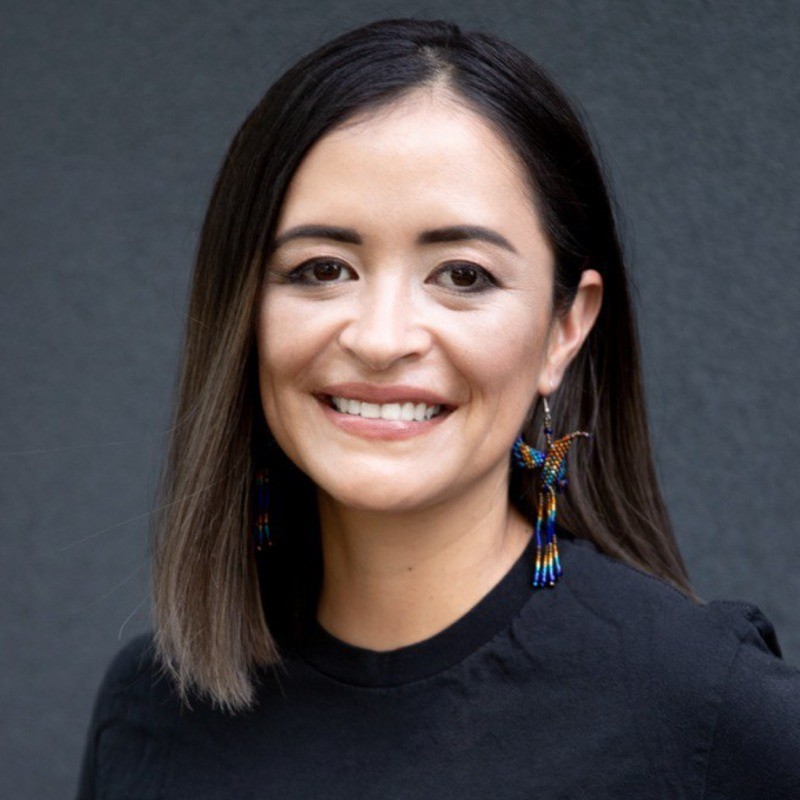
Veronica Sepehr
Founder and Regulated Canadian Immigration Consultant
Westdale Immigration Consulting Inc.
Veronica Sepehr is a research-driven immigration strategist, PhD, and Regulated Canadian Immigration Consultant (RCIC) recognized for her precision, analytical depth, and results-oriented approach. Her practice focuses on spousal sponsorships, post-ITA Express Entry applications, and study permits, areas where attention to detail and strategic clarity make all the difference.
With a background in corporate innovation and legal-product strategy, Veronica brings a unique perspective to immigration practice, combining data-driven insight with practical execution. Fluent in English and Spanish, she’s known for translating complex policy into clear, actionable guidance that empowers both clients and colleagues.
What sets her apart is a rare combination of academic rigour and practitioner insight: a PhD mindset that values evidence, an operational focus that keeps timelines on track, and a people-first approach that turns policy into peace of mind.
Frequently asked questions
Have questions? We’re here to help. Check out our FAQs to learn more about this Course.